PROMPT: Valhalla does not discriminate against the kind of
fight you lost. Did you lose the battle with cancer? Maybe you died in a fist
fight. Even facing addiction. After taking a deep drink from his flagon, Odin
slams his cup down and asks for the glorious tale of your demise!
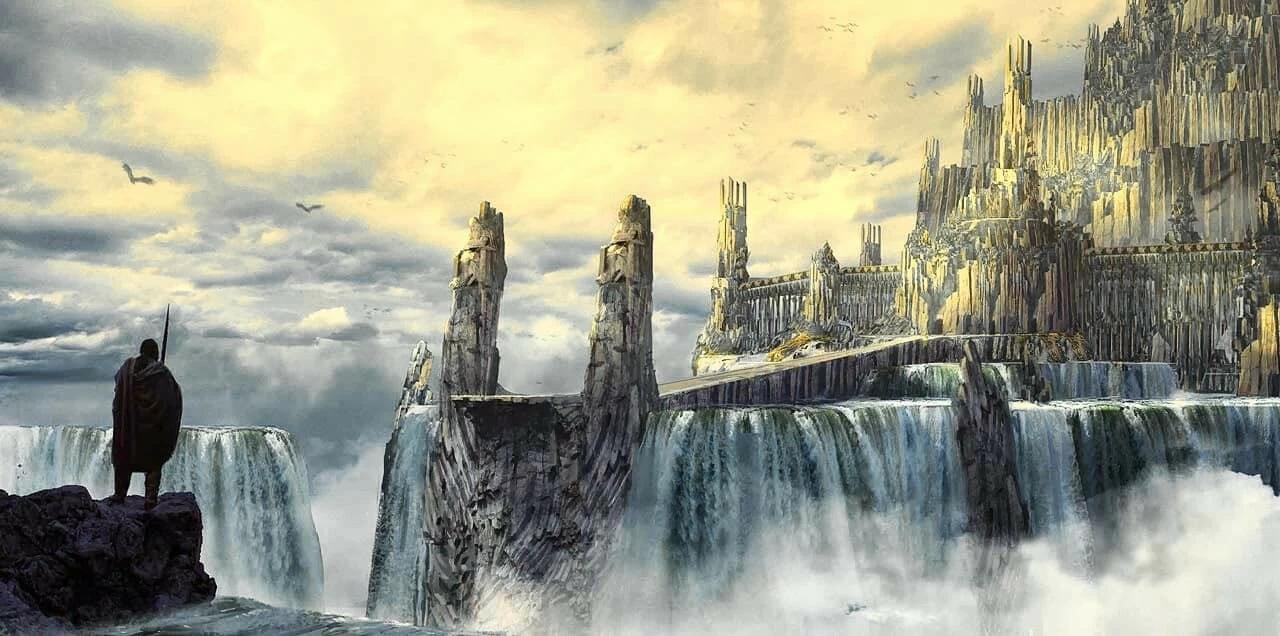 |
| Valhalla - https://www.historicmysteries.com/valhalla-odins-hall-of-the-slain/ |
A small child enters Valhalla. The battle they lost was
“hiding from an alcoholic father.” Odin sees the flinch when he slams the cup
and refrains from doing it again. He hears the child’s pain; no glorious battle
this, but one of fear and wretched survival.
He invites the child to sit with him, offers the choicest
mead and instructs his men to bring a sword and shield, a bow and arrow, of the
very best materials and appropriate size. “Here,” he says, “you will find no
man who dares to harm you. But so you will know your own strength, and be happy
all your days in Valhalla, I will teach you to use these weapons.”
The sad day comes when another child enters the hall. Odin
does not slam his cup; he simply beams with pride as the first child approaches
the newcomer, and holds out her bow and quiver, and says “nobody here will hurt
you. Everyone will be so proud you did your best, and I’ll teach you to use
these, so you always know how strong you are.”
A young man enters the hall. He hesitates when Odin asks his
story, but at long last, it ekes out: skinheads after the Pride parade. His
partner got into a building and called for help. The police took a little
longer than perhaps they really needed to, and two of those selfsame skinheads
are in the hospital now with broken bones that need setting, but six against
one is no fair match. The fear in his face is obvious: here, among men large
enough to break him in two, will he face an eternity of torment for the man he
left behind?
Odin rumbles with anger. Curses the low worms who brought
this man to his table, and regales him with tales of Loki so to show him his
own welcome. “A day will come, my friend, when you seek to be reunited, and so
you shall,” Odin tells him. “To request the aid of your comrades in battle is
no shameful thing.”
A woman in pink sits near the head of the table. She’s very
nearly skin and bones, and has no hair. This will not last; health returns in
Valhalla, and joy, and light, and merrymaking. But now her soul remembers the
battle of her life, and it must heal.
Odin asks.
And asks again.
And the words pour out like poisoned water, things she
couldn’t tell her husband or children. The pain of chemotherapy. The agony of a
mastectomy, the pain still deeper of “we found a tumor in your lymph nodes. I’m
so sorry.” And at last, the tortured question: what is left of her?
Odin raises his flagon high. “What is left of you, fair
warrior queen, is a spirit bright as fire; a will as strong as any forged iron;
a life as great as any sea. Your battle was hard-fought, and lost in the glory
only such furor can bring, and now the pain and fight are behind you."
In the months to come, she becomes a scop of the hall–no
demotion, but simple choice. She tells the stories of the great healers, Agnes
and Tanya, who fought alongside her and thousands of others, who turn from no
battle in the belief that one day, one day, the war may be won; the warriors
Jessie and Mabel and Jeri and Monique, still battling on; the queens and
soldiers and great women of yore.
The day comes when she calls a familiar name, and another
small, scarred woman, eyes sunken and dark, limbs frail, curly black hair
shaved close to her head, looks up and sees her across the hall. Odin descends
from his throne, a tall and foaming goblet in his hands, and stuns the hall
entire into silence as he kneels before the newcomer and holds up the goblet
between her small dark hands and bids her to drink.
“All-Father!” the feasting multitudes cry. “What brings
great Odin, Spear-Shaker, Ancient One, Wand-Bearer, Teacher of Gods, to his
knees for this lone waif?”
He waves them off with a hand.
“This woman, LaTeesha, Destroyer of Cancer, from whom the
great tumors fly in fear, has fought that greatest battle,” he says, his voice
rolling across the hall. “She has fought not another body, but her own; traded
blows not with other limbs but with her own flesh; has allowed herself to be
pierced with needles and scored with knives, taken poison into her very veins
to defeat this enemy, and at long last it is time for her to put her weapons
down. Do you think for a moment this fight is less glorious for being in
silence, her deeds the less for having been aided by others who provided her
weapons? She has a place in this great hall; indeed, the highest place.”
And the children perform feats of archery for the
entertainment of all, and the women sing as the young man who still awaits his
beloved plays a lute–which, after all, is not so different from the guitar he
once used to break a man’s face in that great final fight.
Valhalla is a place of joy, of glory, of great feasting and
merrymaking.

No comments:
Post a Comment